How modern fiber laser technology is reshaping part sourcing decisions
By Dr. Jerusha Myrick
Manufacturing buyers today face constant pressure to reduce lead times, control costs, and maintain reliable supply chains. As production schedules tighten and product changes become more frequent, traditional manufacturing methods do not always provide the flexibility required.
This is one reason many purchasing agents are turning toward production laser cutting as a core part of their sourcing strategy.
Fiber laser technology has evolved significantly over the past decade. What was once considered primarily a prototyping or short-run process is now widely used for high-volume production parts across industries including heavy equipment, transportation, agriculture, and industrial manufacturing.
Understanding why this shift is happening can help buyers make more informed sourcing decisions.
Speed and Lead Time Advantages
One of the most immediate benefits of production laser cutting is the ability to move quickly from drawing to finished parts.
Traditional tooling-based processes such as stamping require the design and manufacturing of dedicated tooling before production can begin. While stamping is highly efficient once tooling is in place, the upfront time investment can delay production when new parts are introduced or when designs change.
Laser cutting removes that tooling step.
Because parts are programmed directly from CAD files, production can begin quickly without waiting for dies or molds to be built. This can significantly reduce lead times for both initial orders and repeat production runs.
For purchasing agents working within tight project timelines, that speed can be critical.
Lower Upfront Cost for Many Production Parts
Tooling costs can represent a significant upfront investment in traditional manufacturing processes. For high-volume parts with stable long-term demand, this investment may make sense.
However, many production parts fall into a different category. They may require quantities of several hundred or several thousand pieces per year, but they may also experience periodic design revisions.
Laser cutting allows manufacturers to produce these parts without the upfront tooling expense. The cost structure shifts toward production efficiency rather than tooling amortization, which can often produce a more flexible and financially practical solution.
For purchasing agents responsible for cost control, this can create meaningful advantages.
Consistent Precision and Repeatability
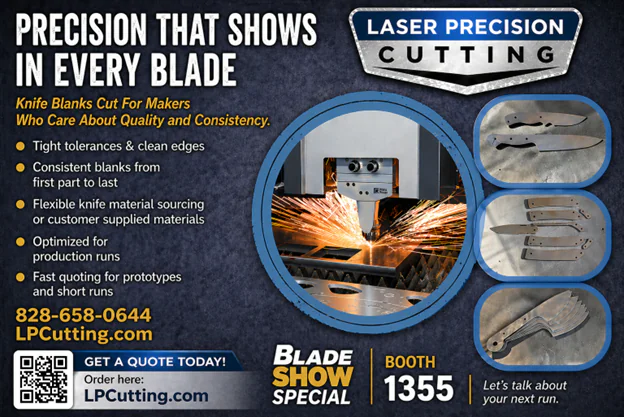
Modern fiber laser systems deliver extremely precise cuts with tight tolerances and clean edges.
Because the cutting process is digitally controlled, each part produced follows the exact same programmed tool path. This results in consistent part quality across production runs.
In many cases, laser-cut parts require little or no secondary finishing before moving to the next step in fabrication or assembly.
Consistency like this is essential for production environments where parts must fit seamlessly into larger assemblies.
Flexibility for Design Changes
In today’s manufacturing environment, product designs evolve frequently.
A change that might require expensive tooling modification in a stamped process can often be implemented quickly in laser cutting simply by updating the program.
This flexibility allows manufacturers to respond to engineering changes, product improvements, and market demands without the delays associated with tooling redesign.
For buyers managing dynamic product lines, that flexibility can significantly reduce operational friction.
Integration With Fabrication and Assembly
Another advantage of production laser cutting is how easily it integrates with additional fabrication processes.
Laser-cut components can move directly into operations such as:
• bending
• tapping
• countersinking
• welding
When these processes are coordinated within the same supplier relationship, manufacturers often experience smoother workflows and reduced logistical complexity.
This type of integrated fabrication approach can streamline production while maintaining high quality standards.
Choosing the Optimal Manufacturing Solution
There is no single manufacturing method that is always the right answer.
In some situations, stamping remains the most efficient option, particularly for extremely high-volume parts with stable designs.
However, for many production components, laser cutting represents the optimal balance of flexibility, speed, and precision.
Purchasing agents who understand the strengths of each manufacturing approach are better equipped to select the right solution for their specific application.
As fiber laser technology continues to advance, its role in production manufacturing will likely continue to expand.
About Laser Precision Cutting
Laser Precision Cutting provides high-accuracy fiber laser cutting services designed to support production manufacturing. Our team works with manufacturers to deliver consistent quality, reliable lead times, and fabrication capabilities that support real-world production environments.